
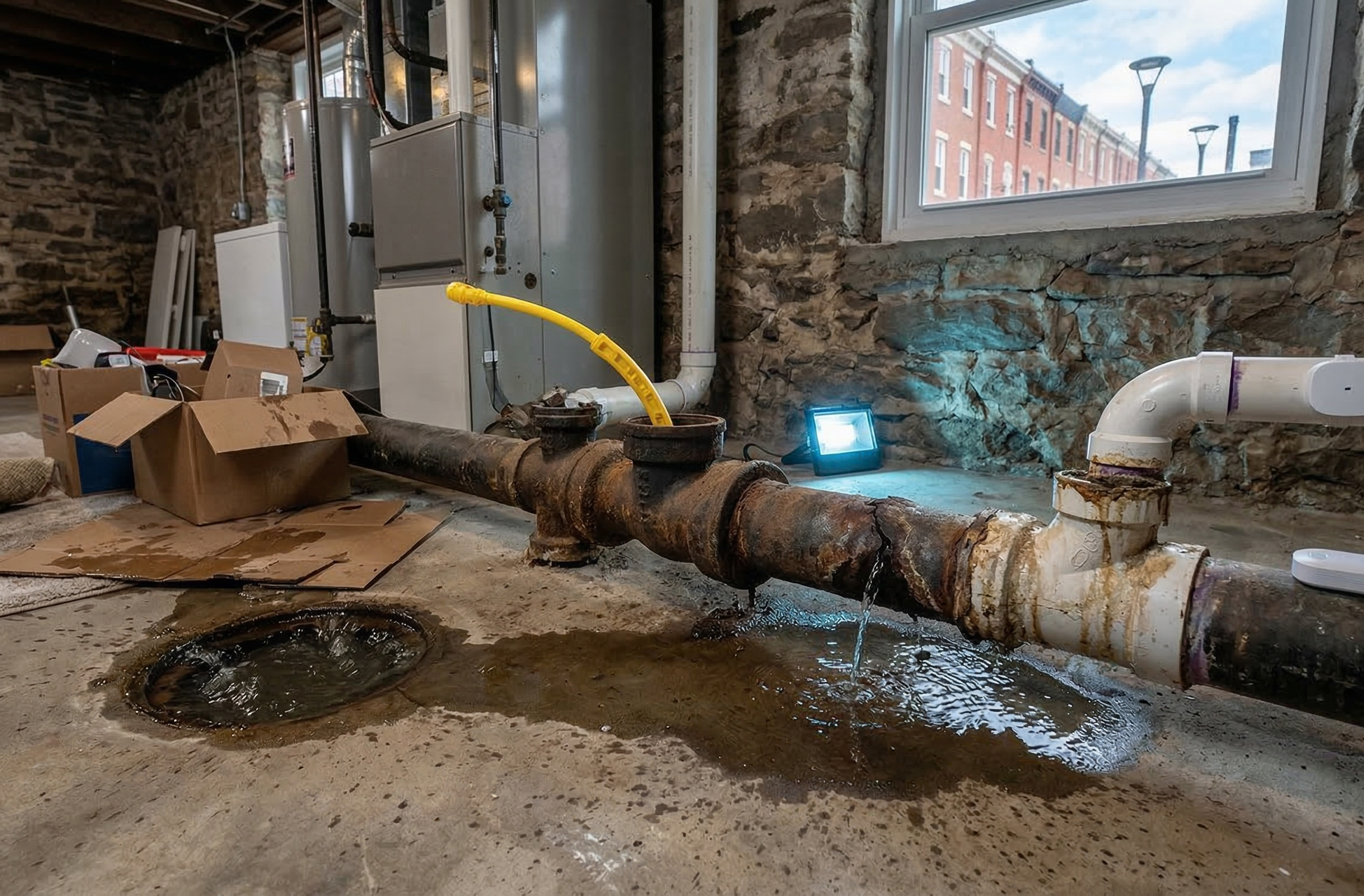
Drain and Sewer Problems Philadelphia Homeowners Should Watch for in 2026
A slow-draining sink, a faint sewer smell, or a recurring clogged drain might seem minor at first. If the problem continues, it can quickly escalate into a serious sewer backup that damages floors, walls, and plumbing systems.
Greater Works Plumbing diagnoses drain and sewer issues in homes across Philadelphia every week. Many of these problems begin with early warning signs that homeowners overlook until the issue becomes urgent.
Understanding the most common causes of drain and sewer problems—and how to prevent them—can help homeowners avoid expensive emergency plumbing services.
Summary
Drain and sewer problems in Philadelphia homes usually start with warning signs. The most common causes include:
- Grease buildup
- Tree roots
- Aging underground pipes
- Hidden leaks
- Pipe buildup
Routine plumbing inspections, clogged drain service, and plumbing maintenance can help prevent many major plumbing failures.
Key Takeaways
- Many sewer problems begin with small drainage issues
- A clogged drain can signal deeper pipe blockages
- Hydrojetting removes grease, sludge, and debris from pipes
- Sewer inspection cameras help plumbers diagnose underground problems
- Preventive plumbing services can stop sewer failures before they start
Why Drain and Sewer Problems Are So Common in Philadelphia
Philadelphia has one of the oldest housing stocks in the country. Many homes still rely on aging sewer infrastructure installed decades ago. These pipes can develop problems such as:
- Mineral buildup and grease accumulation
- Pipe corrosion
- Cracked sewer lines
- Intrusion from tree roots
During service visits across Philadelphia neighborhoods, we frequently find that what begins as a slow-draining sink is often the first sign of deeper pipe buildup.
When these problems are ignored, the buildup continues to grow until wastewater can no longer flow freely through the system.
The Most Common Drain and Sewer Problems We See
At Greater Works Plumbing, our plumbers often diagnose the following issues during plumbing service calls.
Recurring Clogged Drains
A clogged drain is often caused by hair, grease, soap residue, and food waste collecting inside pipes. In kitchens, grease and oils cool inside the pipe and create a sticky layer that traps additional debris.
Our clogged drain service removes these blockages and restores normal drainage.
Tree Roots in Sewer Lines
Another common problem in Philadelphia homes is tree roots in sewer line systems. Tree roots naturally seek moisture. Small cracks in underground sewer pipes allow roots to enter and grow inside the pipe.
Once inside the line, the roots expand and trap debris. Common warning signs include:
- Multiple drains backing up
- Sewage odors inside the home
- Slow drainage throughout the house
A sewer inspection camera can confirm whether roots are causing the blockage.
Sewer Line Blockages
Large sewer blockages prevent wastewater from leaving the home. When the main sewer line becomes blocked, homeowners may experience:
- Toilets backing up
- Water rising in floor drains
- A full sewer backup
A sewer scope inspection helps plumbers identify exactly where the blockage is located and what caused it. If pipe damage is found, sewer repair may be required.
Hidden Plumbing Leaks
Some sewer and drain problems begin with hidden leaks. Small pipe cracks may allow water to escape slowly behind walls or under floors. These leaks can weaken plumbing systems and lead to more severe drainage problems.
Our leak detection services identify hidden plumbing issues before they cause major damage.
Grease and Sludge Buildup
Grease buildup is one of the most common causes of slow drains in Philadelphia kitchens.
When grease enters the drain, it cools and sticks to the pipe walls. This buildup can become thick enough to restrict water flow. In severe cases, plumbers use hydrojet drain cleaning to restore the pipe.
How Hydrojetting Clears Severe Drain Blockages
Once the buildup inside pipes becomes severe, traditional drain snaking may not be enough. Hydrojetting uses highly pressurized water to clean the inside of pipes.
Benefits of hydrojet drain cleaning include:
- Removing grease and sludge buildup
- Clearing stubborn clogs
- Cleaning the entire pipe interior
- Preventing recurring drain blockages
How Plumbers Diagnose Sewer Problems
Modern technology allows plumbers to identify pipe issues quickly and accurately. At Greater Works Plumbing, we follow a step-by-step diagnostic process.
Step 1: Plumbing Inspection
A full plumbing inspection evaluates drain performance and identifies early warning signs.
Step 2: Sewer Line Inspection
A sewer line inspection checks underground pipes for blockages, cracks, and root intrusion.
Step 3: Sewer Camera Inspection
Using a sewer inspection camera, plumbers can see the inside of pipes in real time.
Step 4: Sewer Scope Inspection
A sewer scope inspection helps determine whether cleaning or sewer repair is necessary.
How Homeowners Can Prevent Drain and Sewer Problems
Maintenance is the best way to avoid expensive plumbing emergencies. Philadelphia homeowners can reduce risk by:
- Scheduling plumbing maintenance and sewer line inspections
- Avoiding grease disposal down kitchen drains
- Using drain catchers
- Addressing slow drains early
FAQs
Recurring clogs usually result from grease buildup, soap residue, hair accumulation, or debris deep inside the pipes. Professional clogged drain service clears the blockage and restores water flow.
Plumbers use tools such as a sewer inspection camera during a sewer scope inspection to examine underground pipes and locate cracks, blockages, or root intrusion.
Hydrojet drain cleaning uses high-pressure water to remove grease, sludge, and debris from the inside of pipes.
If a sewer line inspection identifies cracked pipes, collapsed sections, or root intrusion, sewer repair may be required.
Protect Your Sewer and Drains with Greater Works Plumbing
Drain and sewer issues rarely resolve themselves. Small warning signs like a slow-draining sink or recurring clogs often indicate a large problem inside the pipe.
At Greater Works Plumbing, we provide expert plumbing services, including drain cleaning, sewer inspections, leak detection, and emergency sewer repairs throughout Philadelphia. Our team uses advanced technology such as sewer inspection cameras, hydrojetting equipment, and detailed diagnostics to identify problems quickly and restore proper drainage.
If you’re noticing early warning signs, call now to schedule a professional inspection and prevent a costly sewer backup later.