
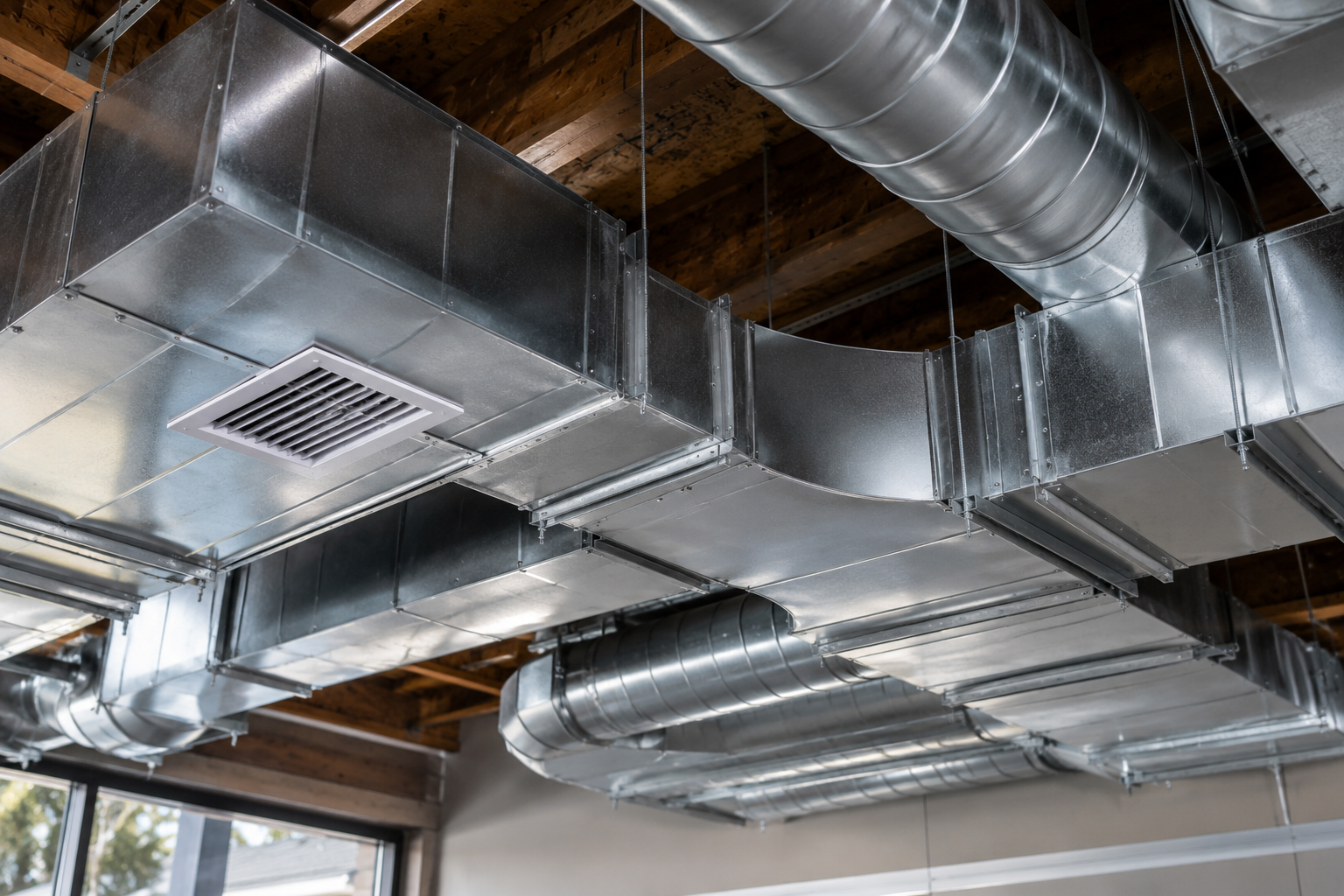
The Ultimate Guide to Forced-Air Cooling
If you’re ready to add cooling to your existing heating setup, a forced-air cooling system is a practical solution. Greater Works Plumbing has served homeowners and businesses throughout Philadelphia and surrounding neighborhoods since 2020, and we’re now expanding into forced-air cooling installations to offer our customers full-service comfort year-round.
This guide walks you through everything you need to know, including what forced-air cooling is, how it works, how it compares to other options, what installation involves, and why keeping your ducts clean is essential to performance.
TL;DR
Forced-air cooling pushes chilled air through your home’s ductwork to cool every room from a single central unit. It’s the most common and cost-effective whole-home cooling method in Philadelphia.
Key Takeaways
- HVAC installation should always include a proper load calculation and ductwork inspection before any equipment is added
- Duct cleaning is essential before activating a new system and every few years during maintenance visits
What Is Forced-Air Cooling?
A forced-air cooling system works by drawing warm air from inside your home, passing it over a refrigerant-cooled evaporator coil, and pushing that cooled air back through ductwork and into each room via supply vents. The “forced” part refers to the blower motor, which drives air through the system while your thermostat calls for cooling.
For Philadelphia homeowners, this approach delivers reliable, consistent comfort without needing a separate window unit or wall-mounted system in every room. If you already have gas heat and ductwork in your home, a forced-air cooling system adds a cooling component to the infrastructure you already own.
How Does Forced-Air Cooling Work?
Understanding how forced-air systems work helps you catch problems early and make smart maintenance decisions. Here’s the basic cycle:
- Warm indoor air is pulled through return vents and across the evaporator coil
- Refrigerant inside the coil absorbs heat from the air
- The blower motor pushes the cooled air into your supply ducts
- Cooled air enters each room through supply vents
- Absorbed heat is released outside through the condenser unit
Forced Air vs. Central Air: Is There a Difference?
“Central air” typically refers to where the cooling source is located. “Forced air” refers to how conditioned air travels through your home. When you’re comparing forced air and central air, you’re usually talking about the same system working together. The distinction usually only matters when you’re specifying equipment with a contractor.
Forced Air vs. Heat Pump: Which Is Right for Philadelphia Homes?
When homeowners compare forced air and heat pump systems, there’s no single right answer. It depends on your home’s layout, existing equipment, and energy priorities.
A traditional forced-air heating and cooling setup pairs a gas furnace with a separate air conditioning system. A heat pump handles both heating and cooling through a single unit by moving heat rather than generating it.
- Heat pumps are highly efficient in mild climates
- If you already have existing ductwork, a forced-air cooling system is a cost-effective path to year-round comfort
- Heat pumps may carry a higher upfront cost but can reduce long-term energy bills
At Greater Works Plumbing, we walk every customer through an honest comparison before recommending any equipment.
What Forced-Air System Installation Involves
A new HVAC system is a big investment, which is why getting it right the first time matters. Installation includes:
- A load calculation to determine the correct equipment size
- A ductwork inspection and sealing check
- Installation of the air handler or furnace unit, evaporator coil, and outdoor condenser
- Thermostat setup and system testing
- A full walkthrough so you know how to operate and maintain your new system
Why Forced-Air Duct Cleaning Matters
Your ductwork carries cooled air to every room, but it also carries whatever has built up inside it. When air pushes through a dirty system, those particles circulate throughout your living spaces.
Cleaning your ducts removes that buildup and restores proper airflow. Skipping it forces your system to work harder, shortens equipment lifespan, and raises your energy bills.

FAQs
What is the difference between a forced-air and a central forced-air system?
In most Philadelphia homes, these two terms describe the same type of setup. The terminology becomes relevant when you’re comparing AC options or describing your system to a contractor.
How long does forced-air system installation take?
A typical residential installation takes one to two days, depending on the complexity of your ductwork and whether existing equipment needs to be removed. If significant ductwork modifications are needed, the timeline may extend.
Is a heat pump better than a forced-air HVAC system?
It depends on your home. Heat pumps are efficient in moderate climates and can reduce energy costs over time. However, Philadelphia winters are cold enough that many homeowners still rely on forced-air heating and cooling.
How do I know if my ducts need cleaning?
Common signs include visible dust coming from supply vents, musty or stale odors when the system runs, uneven temperatures from room to room, or a history of no maintenance on the ductwork. When in doubt, schedule an inspection.
Add Cooling to Your Philadelphia Home with Greater Works Plumbing
If you’re ready to explore forced-air cooling for your home, Greater Works Plumbing is your local resource in Philadelphia. We offer same-day service, 24/7 emergency availability, upfront pricing with no hidden fees, and a 2-year labor guarantee on qualifying work.
If you’re not sure where to start, call us and we’ll walk you through your options over the phone. Schedule your forced-air cooling assessment or duct cleaning inspection today!