
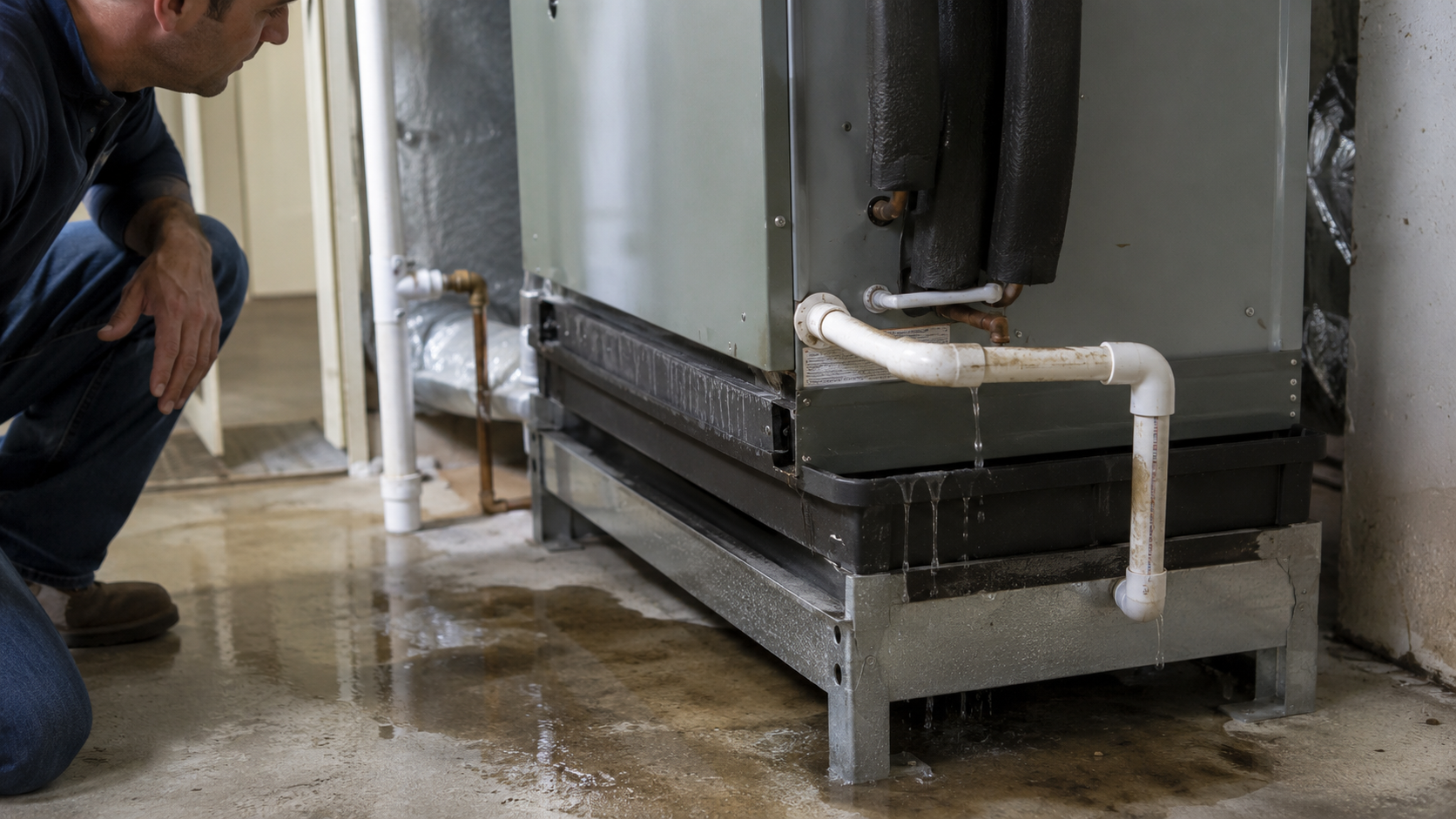
What Caused Your Clogged AC Drain Line (And How to Prevent It from Happening Again)
If you’ve noticed water pooling near your indoor unit, a musty smell coming from your vents, or your AC shutting off unexpectedly, a clogged AC drain line is likely the cause. It’s one of the most common HVAC problems we respond to here in Philadelphia, and one of the most preventable.
At Greater Works Plumbing, our team has been serving homeowners and property managers across Philadelphia and the surrounding area since 2015. We see drain line issues throughout the cooling season. In most cases, they trace back to the same handful of causes that could have been caught early.
TL;DR
A clogged drain line causes water to back up into the drain pan, overflow onto your floors, and damage your ceilings, walls, and HVAC system. The most common culprits are algae buildup, dirt, and debris. Routine HVAC tune-ups are the most effective way to prevent it from happening again.
Key Takeaways
- A clogged drain line is one of the leading causes of an AC water leak
- Recurring clogs point to a deeper maintenance gap
Why Your AC Produces Water in the First Place
Your air conditioner cools air and pulls moisture out of it. As warm, humid air passes over the evaporator coil, condensation forms and drips into a drain pan beneath the unit. From there, it flows out through the condensate drain line.
In Philadelphia, where humidity is high and systems run hard for months at a time in summer, that drain line handles a significant amount of water. When it gets blocked, that water has nowhere to go.
What Causes a Clogged AC Drain Line?
- Mold and algae in the AC drain line
- Dirt, dust, and debris
- Disconnected or damaged drain lines
- A neglected drain pan
Signs of a Clogged AC Drain Line
Your system gives you a warning before a clog becomes a crisis. These are the signs we tell every Philadelphia homeowner to watch for:
- AC leaking water inside the house
- AC drain pan overflowing
- Musty or moldy odor from vents
- AC shutting off unexpectedly
- Air conditioner leaking water onto floors, ceilings below the unit, or inside walls
If you’re seeing any of these signs, don’t ignore them. Water damage compounds quickly, and what starts as a drain issue can become a flooring, drywall, or structural problem.
How to Clean an AC Drain Line
For minor clogs, homeowners can attempt a basic flush. Here’s how:
- Turn the system off
- Locate the drain line access point
- Pour a diluted vinegar solution into the line
- Check for drainage
- Call a professional if the clog doesn’t clear
How to Prevent It from Happening Again
Knowing how to clean an AC drain line is useful. Preventing the clog from forming in the first place is better. These are the HVAC maintenance tips we give to every customer:
- Schedule an annual HVAC tune-up
- Change your air filter regularly
- Use drain line tablets
- Don’t ignore early warning signs

FAQs
How do I know if my AC drain line is clogged?
The most reliable signs of a clogged drain line are water pooling near your indoor unit, a drain pan overflowing, a musty smell coming from your vents, and your system shutting off without explanation. If your AC is leaking water inside the house, a blocked condensate line is the first thing a technician will check.
Can I clean my AC drain line myself?
Yes, for minor buildup. Flushing the line with a diluted white vinegar solution can break down light algae growth and keep the line flowing. If the clog is significant, or if you’re seeing standing water and your system is shutting down, a professional flush is the safer and more thorough option. Improper attempts can push debris deeper into the line and make the blockage worse.
How often should AC drain line maintenance be done?
At minimum, once a year. We recommend inspecting the drain line and pan at the start of the cooling season and mid-season if the system runs continuously. Homes with a history of algae buildup may benefit from quarterly drain line tablets in between.
Is an AC water leak covered by homeowners insurance?
It depends on the policy and the cause. Accidental water damage from a drain line failure is often covered. Gradual damage from a neglected clog is frequently excluded. The best way to protect yourself is regular maintenance and documented service visits.
Schedule an Inspection with Greater Works Plumbing
A clogged drain line is a fixable problem, but it rarely fixes itself. If you’re seeing water, smelling mold, or your system keeps shutting off, Greater Works Plumbing is ready to respond.
We offer same-day HVAC service throughout Philadelphia, with upfront pricing, no hidden fees, and a two-year labor guarantee on qualifying services. Call now to request a free estimate.